Day 1: Budapest
Afternoon: Arrival to Budapest. Transfer by bus to the accommodation and check-in. A tour of Budapest, the historic capital situated on both banks of the Danube, with Buda on the western bank and Pest on the eastern side. On the itinerary: Heroes’ Square, the City Park with Vajdahunyad Castle, the Fisherman’s Bastion with its seven turrets commemorating the Magyar tribes who founded Hungary in AD 896, the neo-Gothic Matthias Church, the Opera House, and the Citadella, offering panoramic views over the city.
Evening: Dinner in the Old Town. Overnight stay in Budapest.
Day 2: Budapest
Morning: Optional Mass at St. Matthias Church, home to the relics of King St. Stephen, the patron saint of Hungary, followed by a visit to St. Michael’s Chapel on Margaret Island.
Afternoon: A scenic cruise along the Danube Bend to Esztergom, the spiritual centre of Hungary and seat of the country’s Catholic Church. The journey continues with stops in Visegrád, the former royal seat of Hungarian kings, and Szentendre, a charming historic town renowned for its preserved architecture and artistic heritage.
Evening: Hungarian folklore evening with traditional dinner, featuring traditional music, wine tasting, and local cultural traditions. Overnight stay in Budapest.
Day 3: Budapest – Levoca
Morning: Crossing of the Slovak border and the Slowacki Kras, a small mountain range listed as a natural heritage site. Arrival in Levoca. Check-in at the accommodation.
Afternoon: Tour of Levoca — one of Slovakia’s best-preserved medieval towns and the historic capital of Spiš. Tour of the medieval town, home to one of Pavol’s Gothic masterpieces: a 58-meter-high altar in St. James Church, the Town Hall, and the Old Minorite Monastery. Mass at the most important shrine to the Virgin Mary in Slovakia.
Evening: Dinner at the accommodation. Overnight stay in Levoca.
Day 4: Levoca – Litmanova – Krakow
Morning: Departure for Litmanová, one of Slovakia’s important pilgrimage sites, known for the reported apparitions of the Blessed Virgin Mary in 1990. Participation in Mass and a procession at the Shrine of Our Lady of Litmanová on Mount Zvir.
Afternoon: Crossing the Slovak–Polish border and a scenic rafting excursion through the Dunajec River Gorge, surrounded by dramatic limestone cliffs and natural landscapes.
Evening: Arrival in Krakow, check-in, and dinner at the accommodation. Overnight stay in Krakow.
Day 5: Krakow
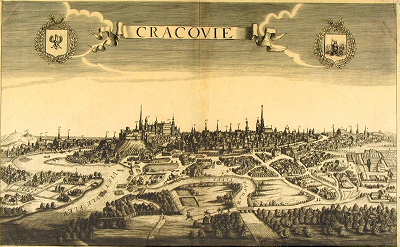
Morning: Guided tour of the Old Town, including: Europe’s largest medieval square (Rynek), the Cloth Hall (Sukiennice), the Jagiellonian University Museum, St Mary’s Basilica and the Royal Route. Visit to Wawel Castle – the historic residence of the kings of Poland since the 11th century – the cathedral with the royal tombs and Sigismund’s Bell.
Afternoon: Arrival at the sanctuary of the Congregation of the Sisters of Our Lady of Mercy in Łagiewniki, where Sister Maria Faustina Kowalska lived. Mass at the Divine Mercy Sanctuary in Łagiewniki.
Evening: Folk-style dinner in the Old Town. Overnight stay in Krakow.
Day 6: Krakow – Czestochowa – Krakow
Morning: A visit to the Pauline Monastery of Jasna Góra, including the Chapel of the Miraculous Image of Our Lady (the Black Madonna), the oldest part of the complex. The sacred icon, displayed on the high altar and adorned with a silver covering, is the spiritual heart of the sanctuary. The visit also includes the Knights’ Hall, the Treasury, the Armoury, and the 600th Anniversary Museum, which houses a collection of religious artefacts, liturgical vestments, and significant historical items, including Lech Wałęsa’s Nobel Prize insignia.
Evening: Dinner and free time. Overnight stay in Krakow.
Day 7: Krakow – Wadowice – Velehrad – Brno
Morning: Departure towards the Polish–Czech border. En route, a visit to Wadowice, the birthplace of Pope John Paul II, including his family home and the parish church where Karol Wojtyła was baptised. The journey continues to nearby Kalwaria Zebrzydowska, one of Poland’s most important pilgrimage destinations. The Bernardine monastery complex, with its network of hillside chapels, attracts pilgrims throughout the year, particularly during Holy Week, when the traditional Passion Mystery celebrations take place.
Arrival in Olomouc, the historic capital of Moravia. The programme includes the Market Square with the Holy Trinity Column, the largest Baroque sculptural monument in Europe; St Michael’s Church, renowned for its exceptional Baroque interior; and St Wenceslas Cathedral.
Afternoon: Visit to Velehrad, one of the most important pilgrimage sites in the Czech Republic, centred around the former Cistercian monastery and the historic site associated with the first bishopric in the Slavic lands. The journey continues through Austerlitz, the site of the famous Battle of the Three Emperors in 1805.
Evening: Late arrival in Brno. Check-in at the accommodation. Dinner. Overnight stay in Brno.
Day 8: Brno – Prague
Morning: Exploration of Brno, with time for prayer at the Cathedral of Saints Peter and Paul. Departure for Prague, arrival and check-in at the accommodation.
Afternoon: The programme includes the Old Town Square with the Old Town Hall and its early 15th-century astronomical clock, the Church of Our Lady before Týn and the Týn Courtyard, the Baroque Church of St Nicholas, the monument to Master Jan Hus, and Pařížská Street in Josefov, Prague’s historic Jewish Quarter. The walking tour continues along the Royal Route, following Celetná Street to the Municipal House, an Art Nouveau masterpiece built between 1905 and 1911 on the site of the former Royal Court, and onward to Wenceslas Square.
Evening: Dinner at a restaurant in the Old Town. Overnight stay in Prague.
Day 9: Prague
Morning: Prayer at the Church of Our Lady Victorious, home to the revered statue of the Infant Jesus of Prague. A guided tour of Prague Castle, including St Vitus Cathedral, dedicated to Saints Vitus, Wenceslas, and Adalbert, St George’s Basilica, and the historic Golden Lane.
Afternoon: Time at leisure for individual exploration of Prague.
Evening: Attendance at a concert from the current programme repertoire, followed by dinner in the Old Town. Overnight stay in Prague.
Day 10: Prague – Kutna Hora – Konopiste Castle – Karlstejn Castle – Prague
Morning: Visit to Kutná Hora, the second most important city in the medieval Kingdom of Bohemia after Prague, whose prosperity was built on its rich silver mines. The town is renowned for its exceptional Gothic heritage, including St Barbara’s Church and its UNESCO-listed historic centre.
The programme continues with a visit to Konopiště Castle, the former residence of Archduke Franz Ferdinand d’Este, heir to the Austro-Hungarian throne. The journey concludes with a visit to Karlštejn Castle, one of the most significant medieval castles in the Czech lands, built between 1348 and 1355 during the reign of Emperor Charles IV to safeguard the crown jewels and important state documents.
Evening: Return to Prague. Dinner. Overnight stay in Prague.
Day 11: Departure
Morning: Check-out from the accommodation and return journey