Day 1: Berlin
Morning: Arrival and check-in at the accommodation. Lunch.
Afternoon: Berlin’s historic highlights – Alexanderplatz, the Nikolausviertel, the Protestant Cathedral, the statue of Frederick the Great, Humboldt University, the famous Unter den Linden boulevard, and the Brandenburg Gate. A tour of the Reichstag – a walk beneath the glass dome and a panoramic view of the city from the terrace. A historical overview of the city’s development from a small medieval town to the capital of Prussia and the era of the Third Reich.
Evening: Dinner and overnight stay in Berlin.
Day 2: Berlin
Morning: Berlin – Capital of the Third Reich: the history of nationalist socialism and the destruction of the city during the Second World War. The "Topography of Terror" exhibition: the Gestapo headquarters, the prison, the SS headquarters and the counter-intelligence network – the most criminal institutions of the era. An overview of the structure of fascist Germany’s apparatus of terror and the work of the war’s administrative criminals.
Visit to the Memorial to the Murdered Jews of Europe and the underground exhibition.
Afternoon: The Berlin Wall – a divided city and a divided Europe
The German capital became a symbol of the Cold War and a divided post-war Europe. The Berlin Wall symbolised the "Iron Curtain", with entire nations imprisoned behind it by the communist dictatorship. All these concepts will be discussed at the former border crossing between East and West Germany, Checkpoint Charlie, and during the tour of the Wall. This will be followed by a visit to the memorial site on Bernauer Strasse.
Evening: Dinner and overnight stay in Berlin.
Day 3: Berlin
Morning: Berlin – a cultural metropolis: contemporary Berlin as a European centre of culture offering a vast array of cultural attractions.
The cultural itinerary includes: The Museum Island, featuring the famous Pergamon Museum and paintings by the masters of European art; the Babelsberg film studio, or a visit to Potsdam – with the Sanssouci Palace and its surrounding gardens.
The following options are also recommended, as they further reflect the central theme and educational focus of the tour:
- The Jewish Museum Berlin – housed in the original building designed by architect Daniel Libeskind, featuring an exhibition offering an insight into the millennial history of the Jews in Germany and their cultural heritage.
- The Scheunenviertel – Berlin’s former Jewish quarter, now a trendy neighbourhood of galleries and artists. The golden domes of the New Synagogue, rebuilt after the terror of "Kristallnacht", dominate the area.
- The Stasi Museum – the former headquarters of the East German (GDR) secret police reveals how this institution of terror and espionage operated.
- The exhibition at the Site of Memory at the House of the Wannsee Conference (Haus der Wannseekonferenz) illustrating the consequences of the "Final Solution" – the decisions taken by Hitler’s regime to exterminate European Jews, and the involvement of all German institutions in this process.
Evening: Dinner and overnight stay in Berlin.
Day 4: Berlin – Dresden – Theresienstadt – Prague
Morning: Historic Dresden was almost entirely destroyed by British and American air raids in February 1945. Rebuilt from the ruins of war, the city now captivates visitors with its panoramic views and beautiful architecture. The itinerary includes: the Zwinger Palace, the Church of Our Lady (Frauenkirche), the Semper Opera House, and the Brühlsche Terrasse, commonly known as the "Balcony of Europe".
Afternoon: Theresienstadt – Within this 18th-century fortress town, the Nazis established a ghetto that became a place of imprisonment for tens of thousands of Jews, primarily deported from the Czech lands and Moravia. Presented by Nazi propaganda as a model “family camp”, Theresienstadt concealed a reality of overcrowding, deprivation, and suffering. The visit includes the former Gestapo prison in the Small Fortress, the Ghetto Museum, and the reconstructed residential barracks in the Magdeburg Barracks.
Evening: Arrival in Prague. Check-in at the accommodation. Dinner and overnight stay in Prague.
Day 5: Prague
Morning: Guided tour. On the itinerary: Hradčany – Prague Castle, St Vitus’ Cathedral, the Golden Lane, the historic Mala Strana quarter, the medieval Charles Bridge over the river Vltava, and the Old Town Square.
Afternoon: A stroll in the Prague’s Jewish quarter, Josefov, including a visit to the Early Gothic Straronova Synagogue and the old Jewish cemetery. The tour continuous with a visit to the Pinkas Synagogue, in which the names of all the murdered Jews of Bohemia and Moravia are inscribed on the walls. The Synagogue is also home to a unique collection of drawings made by children in the Theresienstadt ghetto. Afterwards, the tour heads towards Wenceslas Square, the main square in Prague, venue of the mass demonstrations during Czechoslovakia’s "Velvet revolution".
Evening: Dinner and overnight stay in Prague.
Day 6: Prague – Krakow
Morning: Transfer from Prague to Krakow.
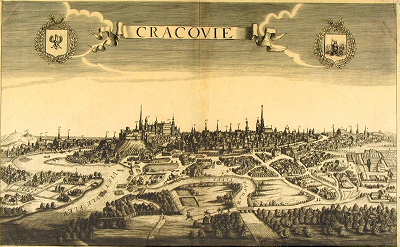
Afternoon: Tour of the Old Town of Krakow – historic capital of Poland. On the itinerary: Europe’s largest medieval square (Rynek), the Cloth Hall (Sukiennice), St Mary’s Basilica, home to Veit Stoss's magnificent altarpiece; the Gothic courtyard of the Collegium Maius; the historic streets of the Old Town; the Cathedral on Wawel Hill, the final resting place of the Polish kings.
Evening: Dinner and overnight stay in Krakow.
Day 7: Krakow – Auschwitz-Birkenau – Krakow
Morning: Transfer to the Auschwitz-Birkenau Memorial and Museum. Visit to the musuem is divided into two parts:
- The exhibition in the blocks at Auschwitz I – Stammlager: the “Death block”, the execution wall, a gas chamber and a crematorium – the only ones of their kind to have been preserved.
- Auschwitz II – Birkenau, the site of the mass extermination of the Jews: prisoners’ barracks, the ruins of the gas chambers and the memorial in honour of the victims.
Evening: Return to Krakow. Dinner, followed by a meeting with a survivor of the ghetto or a "Righteous Among the Nations of the World", one of the people who helped Jewish residents of the city survive during the Holocaust.
Day 8: Krakow
Morning: Tour of Kazimierz, Krakow’s former Jewish quarter. The itinerary includes a visit to the Old Synagogue (Stara Synagoga), which combines Gothic and Renaissance styles – now a museum of Judaism – followed by the 16th-century Jewish cemetery adjacent to the Synagogue Remuh. A tour of the site of the former ghetto in the district of Podgórze: surviving sections of the ghetto wall; the Eagle Pharmacy, a site of memory; and the "Empty chairs" memorial.
Afternoon: Visit to the exhibition "Krakow under Nazi occupation 1939 – 1945" at Oskar Schindler’s Factory Museum.
Evening: Dinner at a Jewish restaurant accompanied by a concert of klezmer music.
Day 9: Krakow – Return flight
Morning: Transfer to the airport and departure.